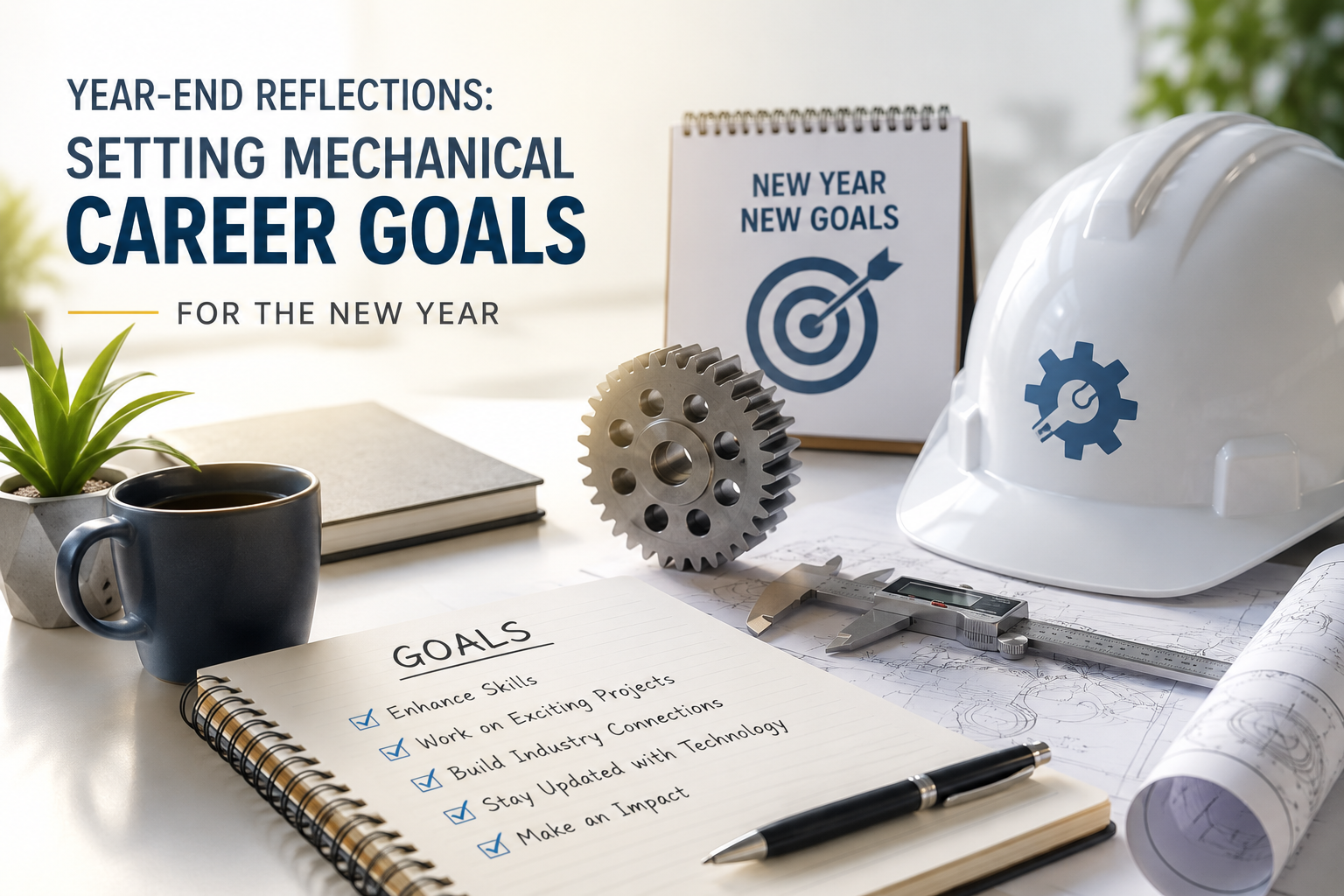
Year-End Reflections: Setting Mechanical Career Goals for the New Year
- Career Guidance
- CADkul Team
- June 15, 2026
- 1 Comment
Reflect on your engineering achievements, identify skill gaps, and set SMART career goals for 2026 with practical tips for mechanical engineers and employers.
As the year comes to a close, it is the perfect opportunity for mechanical engineers and aspiring professionals to reflect on their journey and prepare for the year ahead. Taking time to evaluate your progress, strengthen your skills, and define clear career objectives can help you stay competitive in today's evolving engineering industry. This guide shares practical ideas to review your achievements and set meaningful career goals for the coming year.
Why Year-End Reflection Matters
Looking back on the past year allows you to understand what you accomplished, where you improved, and which areas still need attention. Whether you worked on design projects, improved your technical knowledge, or enhanced your communication skills, every experience contributes to your professional growth. Reflection also helps you align your career plans with emerging technologies such as automation, AI, and digital engineering.
Steps for Effective Year-End Reflection
1. Review Your Achievements
What to Do: Write down your key accomplishments, including completed projects, software skills learned, leadership experiences, or training programs attended.
Example: You may have successfully completed a CAD design project, participated in a CADkul Career Event, or completed a CADkul Certification Program. Record these milestones to measure your progress.
Tip: Maintain a digital portfolio or career journal to keep track of your projects, certifications, and achievements throughout the year.
2. Identify Skill Gaps
What to Do: Evaluate the technical and professional skills you would like to improve, such as CAD software, Python programming, automation, simulation tools, product design, or project management.
Example: Review current industry trends and determine whether upgrading your skills in Python, automation, AI-powered engineering tools, or advanced CAD software would benefit your career.
Tip: Compare your current skills with the qualifications required for your target role and create a structured skill-upgradation plan.
3. Strengthen Your Professional Network
What to Do: Build relationships with industry professionals, mentors, classmates, and recruiters.
Example: Participate in CADkul Career Events, technical workshops, webinars, and engineering seminars to expand your professional network.
Tip: Aim to build at least one meaningful professional connection every month.
Setting SMART Career Goals
Create goals that are Specific, Measurable, Achievable, Relevant, and Time-bound.
Specific: Complete an advanced CADkul Certification Program to strengthen your engineering expertise.
Measurable: Participate in at least three CADkul Career Events, technical workshops, or webinars during the year.
Achievable: Learn Python programming and automation fundamentals within the next six months to improve engineering productivity.
Relevant: Focus on skill upgradation in automation, AI tools, CAD software, and digital engineering technologies that align with your career goals.
Time-bound: Complete your learning roadmap and update your professional portfolio before the end of the year.
Practical Tips for Career Growth
Invest in continuous skill upgradation through CADkul Certification Programs covering CAD, automation, Python, simulation, and engineering design.
Participate regularly in CADkul Career Events, workshops, and webinars to stay informed about the latest engineering trends.
Build a strong portfolio showcasing CAD models, engineering projects, automation workflows, and technical achievements.
Practice Python and automation skills through real-world engineering projects to improve efficiency and problem-solving abilities.
Review your career goals every quarter and update your learning plan as industry technologies continue to evolve.
Advice for Employers
Organizations can encourage employee growth by supporting continuous learning, technical training, and skill upgradation initiatives.
Provide opportunities for engineers to attend CADkul Career Events, Certification Programs, and automation-focused workshops.
Encourage employees to develop expertise in Python, automation, CAD software, and emerging engineering technologies.
Create mentorship programs that help engineers strengthen both technical and leadership capabilities.
Conclusion
Year-end reflection is an excellent habit for anyone pursuing a successful engineering career. By reviewing your achievements, identifying skill gaps, investing in skill upgradation, and setting SMART goals, you can build a clear roadmap for long-term professional success.
With continuous learning, Python and automation expertise, participation in CADkul Career Events, and completion of CADkul Certification Programs, you can stay prepared for future engineering opportunities and achieve your career objectives.
CADkul Team
CADkul Team is the official content team of CADkul, committed to delivering expert insights, industry news, and career-focused resources for aspiring automotive design engineers.

Excellent article! I've created my own career roadmap after reading this. Hoping to achieve my goals and secure a good mechanical design job this year. This helped me rethink my career goals. Instead of waiting for placements, I'll start building my portfolio and working on projects....
Ravikiran khandagale
🎓 Student 01 Jul 2026 04:59 PM